☎ 1800 202 2912 | +91 9717773968 | info@inventanteducation.com

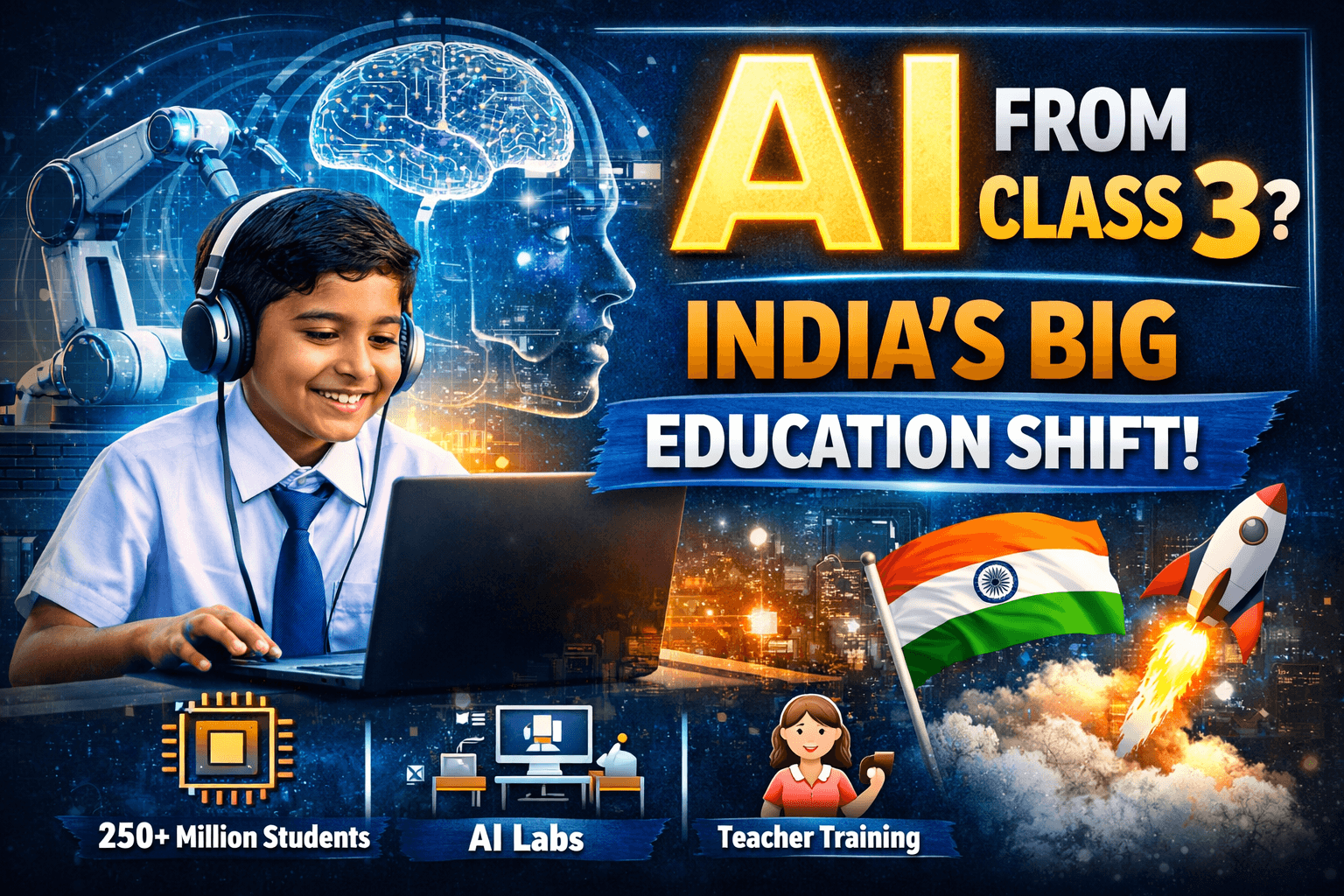
AI Education from Class 3: India’s Bold Leap Towards a Future-Ready Generation

India is standing at the edge of one of the most significant educational transformations in its history. With the introduction of Artificial Intelligence (AI) education from Grade 3, the country is redefining how the next generation will think, learn, and create.
By the 2026–27 academic year, AI will become an integral part of school education, impacting over 250 million students across the nation. This is a strategic move to position India as a global leader in technology and innovation.
Why AI Education from an Early Age Matters
Introducing AI early builds computational thinking, encourages curiosity-driven learning, and develops an innovation mindset. Students begin to understand real-world problem solving and treat technology as a natural skill rather than a complex subject.
Bridging the Industry Skills Gap
This initiative aligns school education with future industry demands. It creates a long-term talent pipeline and ensures students are industry-ready by the time they reach higher education.
Scale and Impact
With over 250 million students targeted, this initiative is one of the largest educational reforms globally. It positions India as a leader in AI education and strengthens its global competitiveness.
Key Challenges
Infrastructure gaps, teacher training, and curriculum design remain major challenges. Addressing these effectively will determine the success of the initiative.
Role of Inventant Education
Inventant Education can play a key role by setting up AI and Robotics Labs, designing practical curriculum, and training teachers to deliver future-ready education.
Future Classrooms
Classrooms will become interactive, project-based, and innovation-driven. Students will learn by building, experimenting, and solving real-world problems.
Conclusion
This initiative has the potential to transform India into a global AI powerhouse. Effective execution will be the key to unlocking its full impact.