☎ 1800 202 2912 | +91 9717773968 | info@inventanteducation.com

The Changing Landscape of Education in India

A Research-Based Analysis of India’s Evolving Education Ecosystem
Introduction
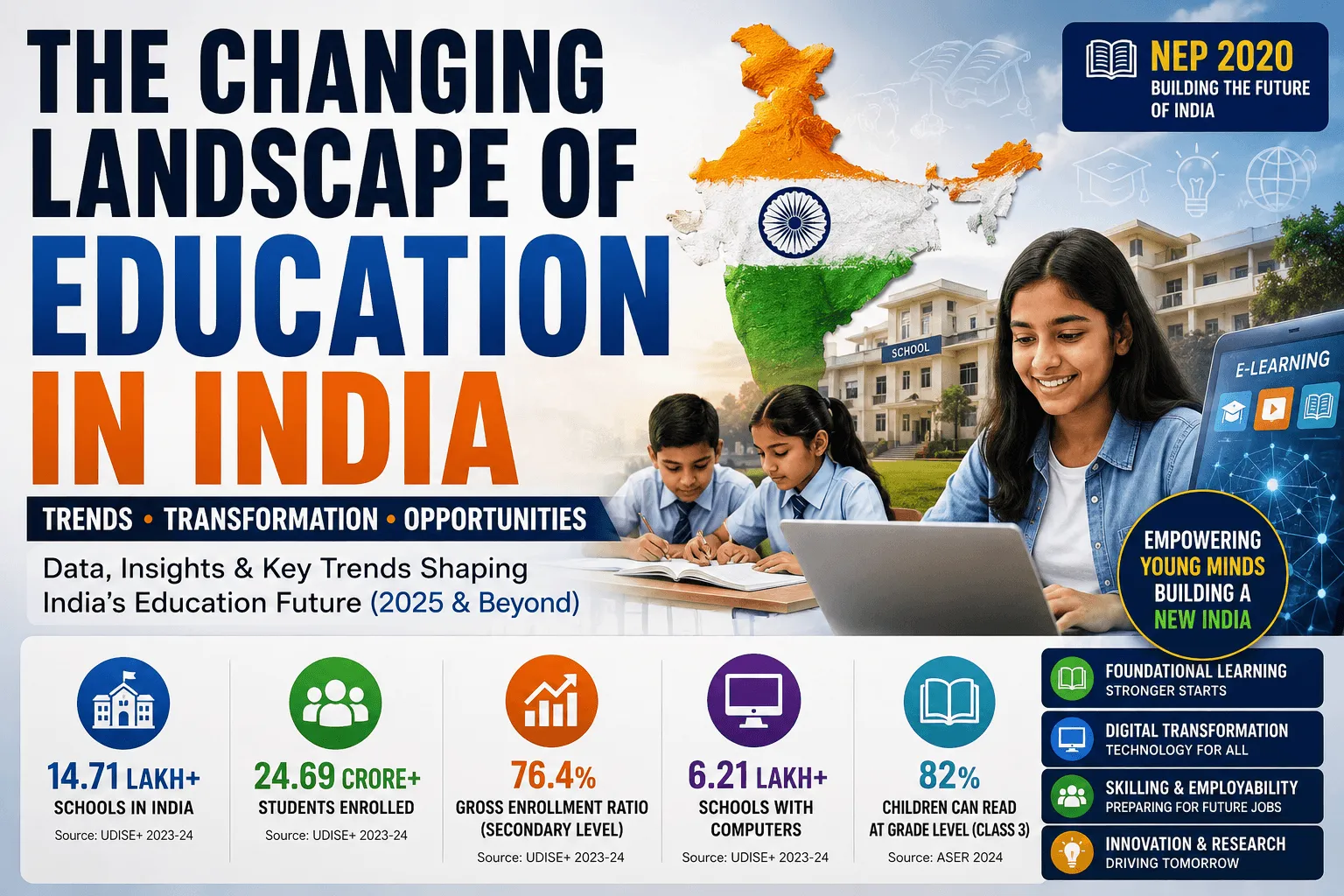
India’s education system is undergoing a transformative shift driven by policy reforms, technology adoption, curriculum redesign, and skill-based learning approaches. The implementation of the National Education Policy (NEP) 2020, increasing digital penetration, and government initiatives have significantly changed how education is delivered across the country.
Key Government Figures
According to Government of India and education datasets such as UDISE+, India has one of the largest education systems globally, with approximately 14.7 lakh schools and more than 24 crore students enrolled. The education system has increasingly focused on accessibility, foundational literacy, digital infrastructure, and employability.
1. Impact of NEP 2020
NEP 2020 introduced multidisciplinary education, competency-based learning, experiential pedagogy, vocational integration, and flexibility in subject choices. The policy also emphasized foundational literacy through initiatives such as NIPUN Bharat and encouraged AI, coding, and digital learning in classrooms.
2. Growth in Enrolment
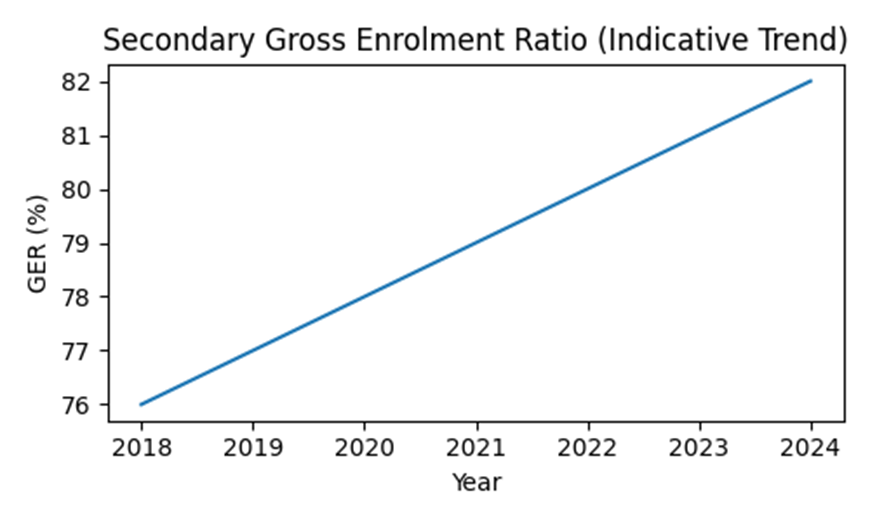
Government data indicates improvement in Gross Enrolment Ratios (GER), especially at secondary and higher secondary levels. Increased access to schooling, scholarships, and awareness has supported enrolment growth.
3. Digital Education Revolution
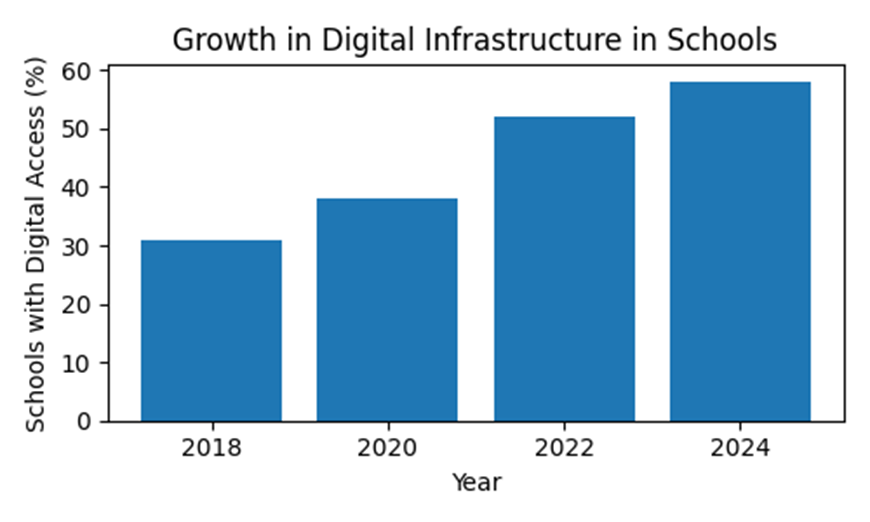
The pandemic accelerated digital learning adoption through platforms such as DIKSHA, SWAYAM, PM eVIDYA, and hybrid classrooms. Smart classes, internet access, and digital teacher training have increased, though rural accessibility challenges remain.
4. Foundational Learning and ASER Trends
ASER reports indicate gradual recovery in foundational literacy and numeracy after pandemic-related learning loss. States are increasingly investing in early-grade interventions, remedial learning, and teacher support systems.
5. Emerging Trends in Indian Education (2025–26)
- AI literacy and technology integration in classrooms
- Skill-based and vocational education
- Personalized and blended learning
- Industry-academia partnerships
- Mental wellness and holistic learning
Challenges
Despite major progress, India continues to face issues related to teacher shortages, regional disparities, digital divide, dropout rates in certain regions, and uneven quality of learning outcomes.
Conclusion
India’s education landscape is rapidly evolving toward a more inclusive, skill-oriented, and technology-driven future. With NEP 2020, digital infrastructure growth, and stronger public-private collaboration, the country is building a system focused not only on academic performance but also on innovation, employability, and holistic development.
References
- Ideas for India – The Changing Landscape of Education in India
- NITI Aayog – School Education System in India
- Ministry of Education (Government of India)
- UDISE+ Reports
- ASER Reports