☎ 1800 202 2912 | +91 9717773968 | info@inventanteducation.com

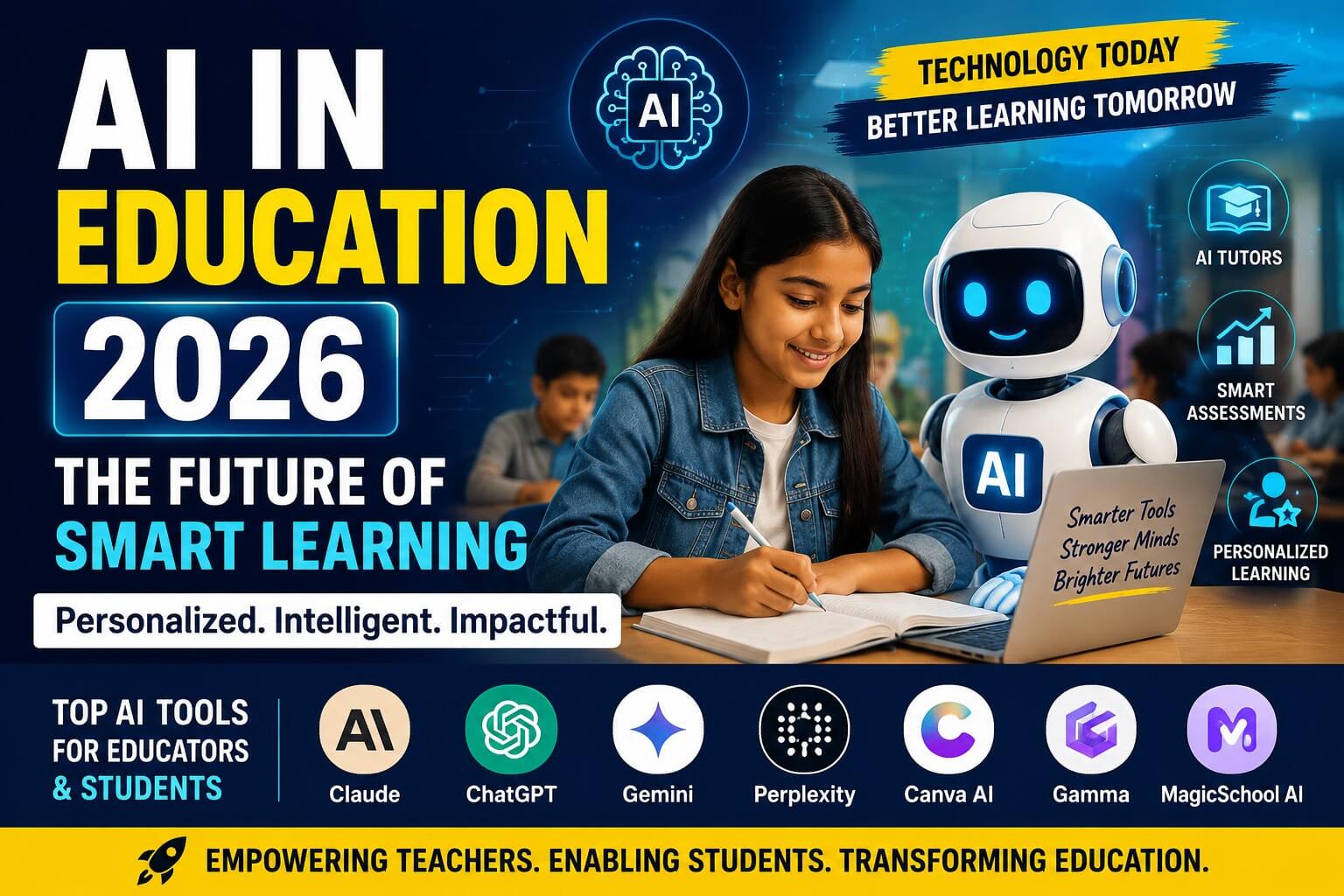
AI in Education : The Future of Learning, Teaching & Schools

Education is undergoing one of the biggest transformations in history. Artificial Intelligence (AI) is no longer a futuristic concept, it is already reshaping classrooms, lesson planning, student assessment, and institutional management. From personalized learning paths to intelligent tutoring systems, AI is enabling schools and educators to deliver smarter, faster, and more inclusive learning experiences.
Why AI in Education Matters in 2026
- Personalized learning experiences for every student
- Reduced teacher workload through automation
- Smart assessments and instant feedback
- Better student engagement and performance tracking
- Improved accessibility for diverse learning needs
- Alignment with India’s digital education vision under NEP 2020
How AI is Transforming Classrooms
1. Personalized Learning
AI can adapt learning speed, difficulty, and content according to a student’s strengths and weaknesses.
2. Smart Teaching Assistance
Teachers can use AI to generate lesson plans, worksheets, quizzes, rubrics, and classroom activities within minutes.
3. Intelligent Assessments
AI helps automate grading, analyze performance patterns, and identify learning gaps early.
4. AI Tutors
Virtual tutors can answer student questions 24/7 and support revision outside the classroom.
5. Accessibility & Inclusion
Speech-to-text, language translation, and adaptive tools support students with different learning needs.
AI in Indian Education: The NEP 2020 Opportunity
India’s National Education Policy (NEP 2020) promotes digital learning, skill-based education, and technology integration. Schools are increasingly exploring AI literacy, coding, computational thinking, and digital learning ecosystems. CBSE and progressive institutions are moving toward future-ready education models where AI plays a supporting role in teaching and learning.
Practical Ways Teachers Can Use AI
- Lesson Planning: Generate engaging lesson plans and activities
- Question Papers: Create MCQs, HOTS questions, and assessments
- Presentation Design: Develop classroom PPTs quickly
- Student Feedback: Create personalized remarks and feedback
- Research & Content: Simplify research and create notes
Top AI Tools Every Educator Should Know
- Claude: Excellent for long-form content writing, lesson planning, research summaries, and nuanced educational content.
- ChatGPT: Useful for brainstorming, classroom activities, scripts, assessments, and personalized teaching support.
- Gemini: Helpful for Google ecosystem integration and educational research.
- Perplexity AI: Research-focused AI tool for fact-based exploration and source-backed answers.
- Canva AI: Create educational posters, worksheets, presentations, and classroom visuals.
- Gamma: Generate beautiful presentations in minutes.
- MagicSchool AI: Designed specifically for teachers to simplify classroom work.
- Khanmigo: AI-powered learning support for students.
Benefits of AI in Education
- Saves teacher time
- Improves student engagement
- Supports individualized learning
- Provides real-time analytics
- Encourages creativity and innovation
- Makes learning more accessible
Challenges & Ethical Concerns
Despite its advantages, AI comes with challenges such as overdependence, misinformation, student privacy concerns, bias in algorithms, and unequal access to technology. Schools must adopt responsible AI policies and ensure teachers are trained to use AI ethically.
The Future of AI in Education (2026–2030)
In the coming years, classrooms may feature AI-powered personalized curricula, predictive performance systems, virtual laboratories, multilingual tutors, and immersive learning through AR/VR combined with AI. Rather than replacing teachers, AI will empower educators to focus more on mentorship, creativity, and emotional learning.
How Schools Can Start Implementing AI
- Train teachers in AI literacy
- Introduce safe and ethical AI policies
- Use AI for administrative efficiency
- Pilot AI-assisted learning tools in classrooms
- Encourage students to build responsible AI skills
Conclusion
AI in education is not just a trend, it is becoming a necessity. The schools and educators who embrace AI thoughtfully will be better positioned to prepare students for the future. The goal is not to replace human teaching, but to make learning more engaging, inclusive, intelligent, and future-ready.